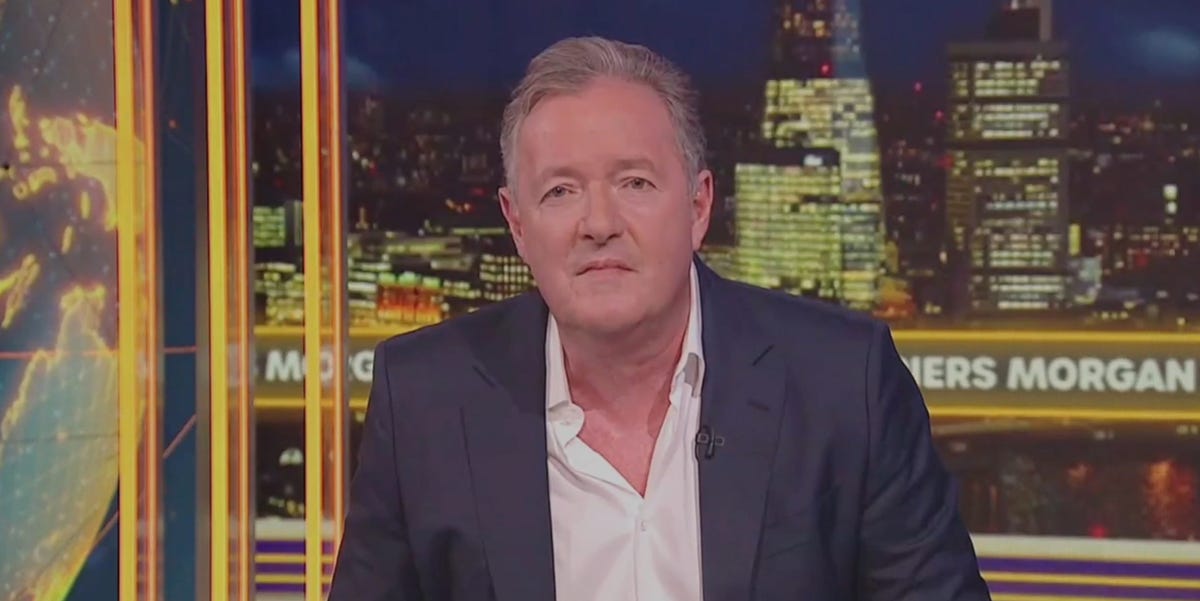
Manosphere Showdown: Why Piers Morgan Stormed Off With HSTikkyTokky
The digital landscape is a battleground of ideas, personalities, and often, explosive confrontations. Few recent clashes have captivated audiences quite like the dramatic walk-off by veteran broadcaster Piers Morgan during an interview with controversial "manosphere" influencer HSTikkyTokky. What started as a heated discussion about online communities quickly devolved into a personal attack that pushed Morgan past his breaking point, culminating in an unceremonious end to the broadcast. This highly publicized incident not only highlighted the polarizing nature of figures like Hstikkytokky Piers Morgan but also underscored the challenges mainstream media faces when engaging with the burgeoning, often provocative, world of internet culture.
The Fateful Encounter: How the Piers Morgan HSTikkyTokky Interview Unfolded
The stage was set on Piers Morgan’s own show, Piers Uncensored, with Harrison Sullivan, better known as HSTikkyTokky, joining remotely via Zoom. Sullivan, a 24-year-old internet personality, had recently gained significant traction after appearing in Louis Theroux’s Netflix documentary, Inside the Manosphere. There, he had showcased his views on ultra-masculine online communities, women, cryptocurrency, and fitness – often sparking considerable debate and backlash.
From the outset, the interview was fraught with tension. Morgan, known for his no-holds-barred interviewing style, wasted no time in confronting HSTikkyTokky about some of his more contentious statements, including a particularly unsettling claim from the Theroux documentary about disowning a hypothetical gay son. Morgan accused Sullivan of making himself look like an "even bigger idiot" than he did on Netflix.
HSTikkyTokky, unfazed and seemingly relishing the confrontation, retorted with equal audacity, suggesting that to "people like you, sir, I don't mind that - you make yourself look like an idiot every single day." The exchange quickly spiraled, punctuated by frequent interruptions and escalating insults. Morgan eventually unleashed a torrent of criticism, declaring, "Here is what I think about you. I watched the documentary, and I think you’re a f***ing idiot. I think you’re a sexist, misogynist, homophobic twerp who got exposed in a global way by Netflix, by Louis Theroux, for what you are. You’re a little halfwit." These strong words set the stage for an even more dramatic turn.
The Line Crossed: Celia Walden's Photo and the Walk-Off
The interview's breaking point arrived approximately 15 minutes into the discussion. As the arguments intensified, HSTikkyTokky unexpectedly pulled out his phone and held it towards the camera, displaying a social media post. The image on the screen was a tongue-in-cheek Instagram post from Morgan’s wife, journalist Celia Walden. The snap showed Walden sunbathing next to a sign that read, "Wanted: Pool Boy," with a caption joking, "Applications now open."
HSTikkyTokky’s intention was clear: to derail Morgan by making a highly personal, provocative jab. He commented, "I don’t know why you come on like you’re holier than thou, who is this? That’s your ting bro, that’s your girl. Cooked." For Piers Morgan, a man who prides himself on his journalistic integrity and often fiercely defends his family, this was the ultimate disrespect.
The comment, aimed directly at his wife, pushed Morgan past his limit. With a visible shift in demeanor, he declared, "Let’s end this, let’s end this please. You know what guys, I’m not doing this, it’s pointless." Without another word, Morgan stood up and walked off the set, leaving the show's producers scrambling and HSTikkyTokky visibly laughing on screen from his remote location. The explosive moment instantly went viral, sparking widespread debate about personal boundaries in interviews and the tactics employed by controversial online figures. For more details on this pivotal moment, read our article: Celia Walden Photo & 'F***ing Idiot' Row: Morgan's HSTikkyTokky Fury.
Beyond the Confrontation: Decoding the Manosphere's Impact
The confrontation between HSTikkyTokky and Piers Morgan is more than just a sensational TV moment; it's a microcosm of a larger cultural phenomenon: the rise of the "manosphere." This loosely connected network of online communities promotes various ideologies centered on masculinity, often incorporating anti-feminist, misogynistic, and sometimes homophobic views. Figures like HSTikkyTokky build large followings by tapping into a sense of disaffection or grievance among certain male demographics, offering simplistic solutions or validating controversial viewpoints.
One of the key insights from this event is the challenge mainstream media faces when attempting to engage with such figures. On one hand, there's a journalistic imperative to understand and report on these growing subcultures, especially given their influence on younger audiences. Documentaries like Louis Theroux's Inside the Manosphere aim to shed light on these communities. However, inviting these figures onto platforms like Piers Uncensored also risks inadvertently amplifying their messages, even when the intention is to challenge them.
HSTikkyTokky’s on-air behavior – the constant interruptions, the personal attack, and the apparent enjoyment of the chaos – reflects a common strategy employed by some online personalities. It's designed to provoke, to create viral moments, and to generate engagement, often regardless of the content's substance. For the audience, this incident serves as a crucial reminder of media literacy. When consuming content from online influencers, it's vital to:
- Question motivations: What is the influencer trying to achieve? Is it genuine discourse or viral attention?
- Verify claims: Does the information presented hold up to scrutiny?
- Recognize rhetoric: Be aware of tactics designed to provoke emotional responses rather than rational thought.
- Understand the platform: Different platforms (TikTok, YouTube, traditional TV) foster different communication styles and expectations.
Aftermath and Digital Footprint: Who "Won" the Showdown?
In the immediate aftermath, the interview was not posted on Piers Morgan's official YouTube channel, and the usually outspoken host remained uncharacteristically silent on social media about the exchange. HSTikkyTokky, however, streamed the full, unedited confrontation on his Kick account, allowing his followers to witness his perspective of the event. This disparity in immediate post-interview dissemination speaks volumes about the differing objectives and audience dynamics of traditional versus new media.
The question of who "won" the showdown is complex. From Morgan's perspective, walking off was a definitive statement against what he perceived as unjournalistic, disrespectful, and utterly pointless engagement. He refused to tolerate a personal attack on his family and maintained his integrity as a host. However, for HSTikkyTokky, the virality of the incident likely served his purpose: increased visibility, further solidifying his controversial brand, and providing content that resonates with his audience, who often view mainstream media figures like Morgan with skepticism.
In the court of public opinion, reactions were sharply divided. Many lauded Morgan for taking a stand, while others criticized him for losing his composure or for providing HSTikkyTokky with the very platform he seemingly craved. This incident highlights the evolving nature of online discourse, where traditional rules of engagement often don't apply, and where provoking a strong reaction can be a currency in itself. It also serves as a stark reminder of the importance of respectful debate, even when ideological differences are profound. To delve deeper into the full blow-by-blow, check out: Piers Morgan vs. HSTikkyTokky: The Explosive Interview Walk-Off.
The Hstikkytokky Piers Morgan showdown was more than just a television drama; it was a potent demonstration of the clash between old and new media, between traditional journalistic ethics and the provocative tactics of the online manosphere. While Piers Morgan definitively walked off his show, the digital footprint of the incident continues to circulate, sparking conversations and forcing a deeper look into the dynamics of online influence and public confrontation in the 21st century.